
Weight loss surgery · Ireland
Bariatric surgery in Ireland
The operations surgeons use in Ireland, what each one does, how much weight people lose, and what each costs.
Bariatric surgery, or weight loss surgery, makes the stomach smaller, and some types also bypass part of the bowel. In Ireland the gastric sleeve and the gastric bypass are the two main operations. The HSE says surgery, with lifestyle changes, can help you lose 20% to 40% of your weight. It's usually considered at a BMI of 40 or more, or 35 to 40 with a weight-related condition.
- 20 to 40%of body weight lost with surgery, says the HSE
- BMI 40+or 35+ with a related condition
- 1 to 3 daysin hospital
- For lifefollow-up and vitamins
Free check · about a minute
Am I eligible?
See where your BMI sits against the usual criteria, what it costs in Ireland and what the HSE, insurance and tax relief can do. A surgeon always makes the final call.
Your height and weight never leave your device. If you ask a clinic to contact you, we send only a BMI band and your answers, with your consent.
The types of bariatric surgery
| Operation | What's done | Typical weight loss | Reversible? |
|---|---|---|---|
| Gastric sleeve | About 80% of the stomach is removed, leaving a narrow tube | Up to 25 to 30% of body weight | No |
| Gastric bypass | A small stomach pouch is joined to the small bowel, bypassing the rest | Up to 30 to 35% | Rarely, and only with major surgery |
| Mini gastric bypass | A longer, narrow pouch joined to a loop of bowel with one join | Up to 30 to 35% | Rarely |
| Gastric band | An adjustable band around the top of the stomach | Less, and less lasting | Yes, it can be removed |
| Gastric balloon | Not surgery: a balloon sits in the stomach for months | Less than surgery | Yes, it's temporary |
Weight loss figures are typical results over 12 to 24 months reported by an NHS bariatric unit. Your own result depends on your starting weight, your health and the changes you keep up.
Which operation is used most?
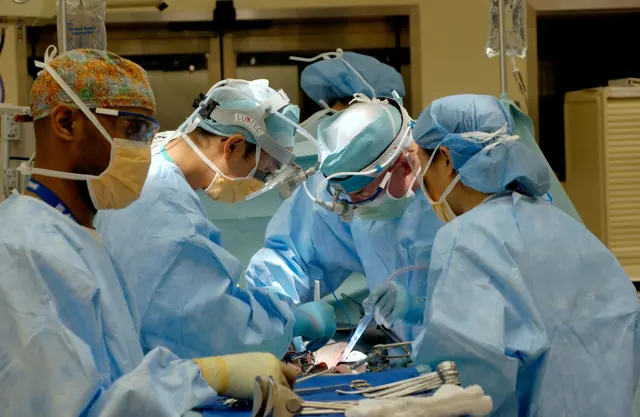
The gastric sleeve is the most common weight loss operation worldwide. It's simpler than a bypass and leaves the bowel alone. A bypass is often suggested if you have bad acid reflux, because a sleeve can make reflux worse, or if type 2 diabetes is the main concern. The gastric band, once common, is rarely used now. Sleeve vs bypass compared.
Who qualifies
The HSE's criteria: it must be safe for you to have an anaesthetic and surgery, you must be able to commit to long-term follow-up, and you need a BMI of 40 or more, or a BMI of 35 to 40 with a medical problem related to your weight, such as type 2 diabetes, high blood pressure or sleep apnoea. A lower BMI may be considered for people of South Asian, Chinese, other Asian, Middle Eastern, Black African or African-Caribbean background. Who is eligible: the BMI criteria.
Public, private or insured
Public. Your GP refers you to a specialist obesity service in a public hospital. The surgery is free at the point of care, but the HSE did 208 bariatric operations in 2024, and its national clinical lead for obesity has said waiting lists can be up to five years long. The HSE route.
Private. You can usually see a surgeon within weeks. Most private bariatric surgery in Ireland is done in Dublin, and some in Galway. What it costs.
Insured. Many hospital plans cover listed bariatric operations once you meet their criteria. Insurance and bariatric surgery.
What every operation has in common
Whichever operation you have, the HSE describes the same commitments afterwards: follow-up appointments for the rest of your life, usually at a specialist obesity clinic for at least the first two years and then yearly with your GP; vitamins and blood tests for life; and a staged diet, from liquids to soft food to a normal, balanced diet over about three months. Some weight regain after the first 12 to 18 months is common, and the HSE says this is not a sign that the surgery has failed.
Questions people ask
What is the safest weight loss surgery?
Every operation has risks, and the right one depends on your health. The sleeve and bypass are both well established keyhole operations. A gastric balloon isn't surgery, so it carries fewer serious risks, but it also leads to less weight loss. Your surgeon will explain the risks for you.
How long is the recovery?
Most people leave hospital after one to three days and go back to a desk job after two to three weeks. Physical work takes longer. The diet moves from liquids to normal food over about twelve weeks. Recovery week by week.
Can I get weight loss surgery on the medical card?
The medical card doesn't change the route. Public bariatric surgery is through a GP referral to an HSE specialist obesity service, and there's no hospital charge for public patients.
Is weight loss surgery a quick fix?
No. It's a tool that makes eating less much easier, but it needs lifelong changes to how you eat, plus vitamins and follow-up for life.
Read next
Free, private, one clinic
Check where you stand in about a minute
Your BMI against the usual criteria, the cost in Ireland, and what the HSE, insurance and tax relief can do.
Check if I'm eligible